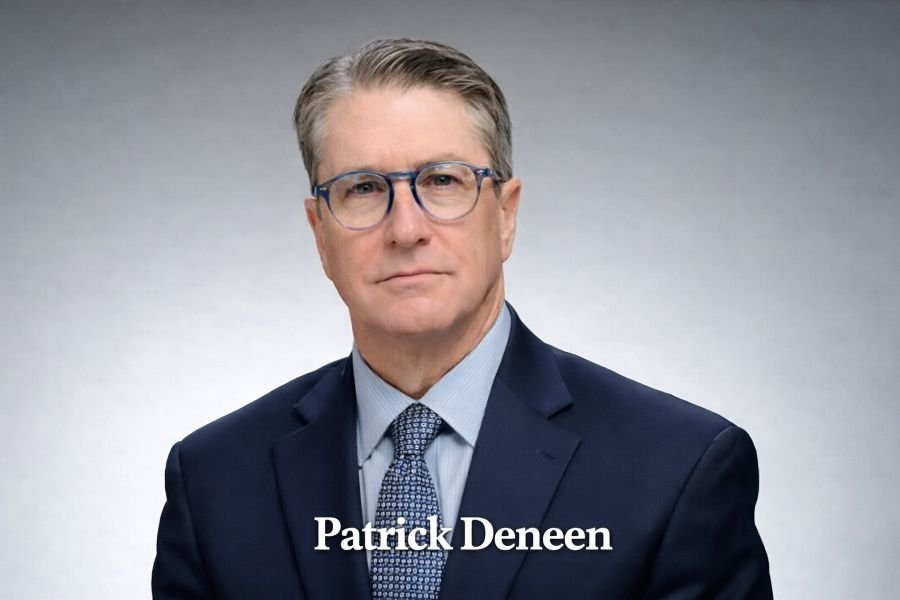
Patrick Deneen: A Fearless Intellectual Voice Challenging Modern Liberal Thought
An American Author Who Redefined Political Debate with Courage, Critique, and Conviction

Introduction
Patrick Deneen is widely recognized as one of the most influential and controversial political thinkers of the modern era. As an American author and political theorist, he has built a reputation for questioning dominant ideologies and forcing readers to confront uncomfortable truths about democracy, liberalism, and modern society. His work is praised for its intellectual depth and moral seriousness, while also criticized for challenging long-held assumptions in Western political thought.
Through decades of academic teaching and public writing, Patrick Deneen has emerged as a powerful voice in contemporary political philosophy. His ideas resonate far beyond university classrooms, shaping debates among scholars, policymakers, and general readers who seek to understand the cultural and political tensions of the modern world.
Quick Bio
| Field | Details |
|---|---|
| Full Name | Patrick John Deneen |
| Known As | Patrick Deneen |
| Date of Birth | July 21, 1964 |
| Age | 61 years |
| Birthplace | Windsor, Connecticut, United States |
| Nationality | American |
| Ethnicity | Irish-American |
| Religion | Roman Catholic |
| Profession | Political theorist, professor, American author |
| Spouse | Inge Deneen |
| Children | Three |
| Academic Position | Professor of Political Science, University of Notre Dame |
Early Life and Intellectual Foundations
Patrick Deneen was born and raised in Windsor, Connecticut, where he grew up in a Catholic household that emphasized education, faith, and moral responsibility. His early environment played a significant role in shaping his worldview, particularly his later emphasis on tradition, community, and the ethical limits of political systems. From a young age, he showed a strong interest in literature and ideas, which later became central to his academic path.
During his formative years, Deneen developed a deep appreciation for classical texts and philosophical inquiry. These early influences helped him form a critical perspective on modern political ideologies, laying the groundwork for his future scholarship. His upbringing encouraged disciplined thinking and reflection, qualities that became hallmarks of his writing and teaching style.
Education and Academic Excellence
Patrick Deneen pursued higher education with distinction, earning a bachelor’s degree in English literature from Rutgers University, where he graduated summa cum laude. His academic excellence and intellectual clarity earned him the honor of serving as commencement speaker, an early indication of his ability to communicate complex ideas with confidence and authority.
He later completed a doctorate in political science, also at Rutgers University. His doctoral work focused on political theory and earned one of the discipline’s most prestigious dissertation awards. This period marked the beginning of his transition from a student of ideas to a serious contributor to political philosophy, with a scholarly voice rooted in both classical traditions and contemporary concerns.
Start of Career and Professional Growth
Patrick Deneen began his professional journey by working in public service as a speechwriter and advisor in a federal agency. This experience provided him with direct exposure to the practical realities of governance, complementing his theoretical background. It also deepened his skepticism toward abstract political promises disconnected from lived social realities.
Soon after, he entered academia, where he would spend the majority of his career. Teaching at respected universities, he quickly gained recognition as a thoughtful and demanding scholar. His early career combined rigorous research with active teaching, allowing him to refine his ideas while mentoring students in political theory and democratic thought.
Academic Career and Teaching Legacy
Over the years, Patrick Deneen held faculty positions at several prestigious institutions before joining the University of Notre Dame, where he became a leading figure in constitutional studies. His classrooms became spaces of serious intellectual engagement, known for encouraging debate, historical awareness, and moral reasoning rather than ideological conformity.
As a professor, Deneen emphasized the importance of civic responsibility and ethical limits in political life. He challenged students to question whether modern systems truly serve human flourishing. His teaching career reflects a commitment to forming thoughtful citizens, not just producing academic credentials.
Career as an American Author
Patrick Deneen’s reputation as an American author extends well beyond academic circles. His books explore the philosophical foundations of democracy and critique the assumptions of modern liberal ideology. Written in a clear yet intellectually demanding style, his works are accessible to both scholars and general readers interested in political culture.
His most widely discussed writings argue that modern political systems often undermine the very values they claim to protect. By drawing on history, philosophy, and cultural analysis, Deneen presents a compelling narrative that has influenced debates across ideological lines. His authorship is defined by intellectual courage and a willingness to confront popular assumptions.
Ideas, Themes, and Intellectual Approach
At the heart of Patrick Deneen’s thought is a critique of excessive individualism and unchecked political freedom. He argues that societies function best when grounded in shared moral frameworks, cultural continuity, and strong local communities. His work stresses that freedom without responsibility can weaken social bonds and democratic institutions.
Deneen’s approach blends classical philosophy, religious thought, and modern political analysis. Rather than offering simplistic solutions, he invites readers to reconsider the foundations of political life. This depth and nuance make his work both influential and controversial, attracting readers who value serious intellectual engagement.
Public Influence and Cultural Impact
Patrick Deneen’s ideas have shaped discussions well beyond the academy. His work is frequently cited in cultural debates about democracy, education, and the future of Western societies. As a public intellectual, he participates in lectures, forums, and discussions that explore the moral dimensions of politics.
While praised by supporters for his honesty and depth, he is also criticized by opponents who see his arguments as challenging modern progress. This tension has only amplified his influence, ensuring that his ideas remain central to contemporary political conversations.
Conclusion
Patrick Deneen stands as a powerful and polarizing figure in modern political thought. As an American author and scholar, he has dedicated his career to examining the strengths and weaknesses of contemporary political systems. His work challenges readers to think beyond surface-level politics and consider the deeper moral and cultural foundations of society.
Through teaching, writing, and public engagement, Deneen has left a lasting mark on political philosophy. Whether admired or contested, his legacy is defined by intellectual seriousness, courage, and a relentless pursuit of truth in an age of easy answers.
Frequently Asked Questions
Who is Patrick Deneen?
Patrick Deneen is an American author, political theorist, and professor known for his critiques of modern political ideologies.
What is Patrick Deneen known for?
He is known for his influential books and essays that examine democracy, liberalism, and the moral foundations of political life.
Where does Patrick Deneen teach?
He is a professor of political science at the University of Notre Dame.
What themes dominate Patrick Deneen’s work?
His work focuses on community, tradition, democracy, moral responsibility, and the limits of modern political systems.
Why is Patrick Deneen influential?
He is influential because his ideas challenge dominant narratives and encourage deeper reflection on the future of democratic societies.